Thursday, October 2, 2014

Wintering in Olympic National Park


Olympic National Park in the northwestern corner of Washington might not appear on too many winter vacation agendas, but it’s the season when the park shows its more dramatic side. Sure,
Ruby Beach
you’ll run into wet weather, but the payoff in solitude and tranquility is worth it. There’s snow in the mountains, wild waves along the beaches, and the rainforests are never greener.
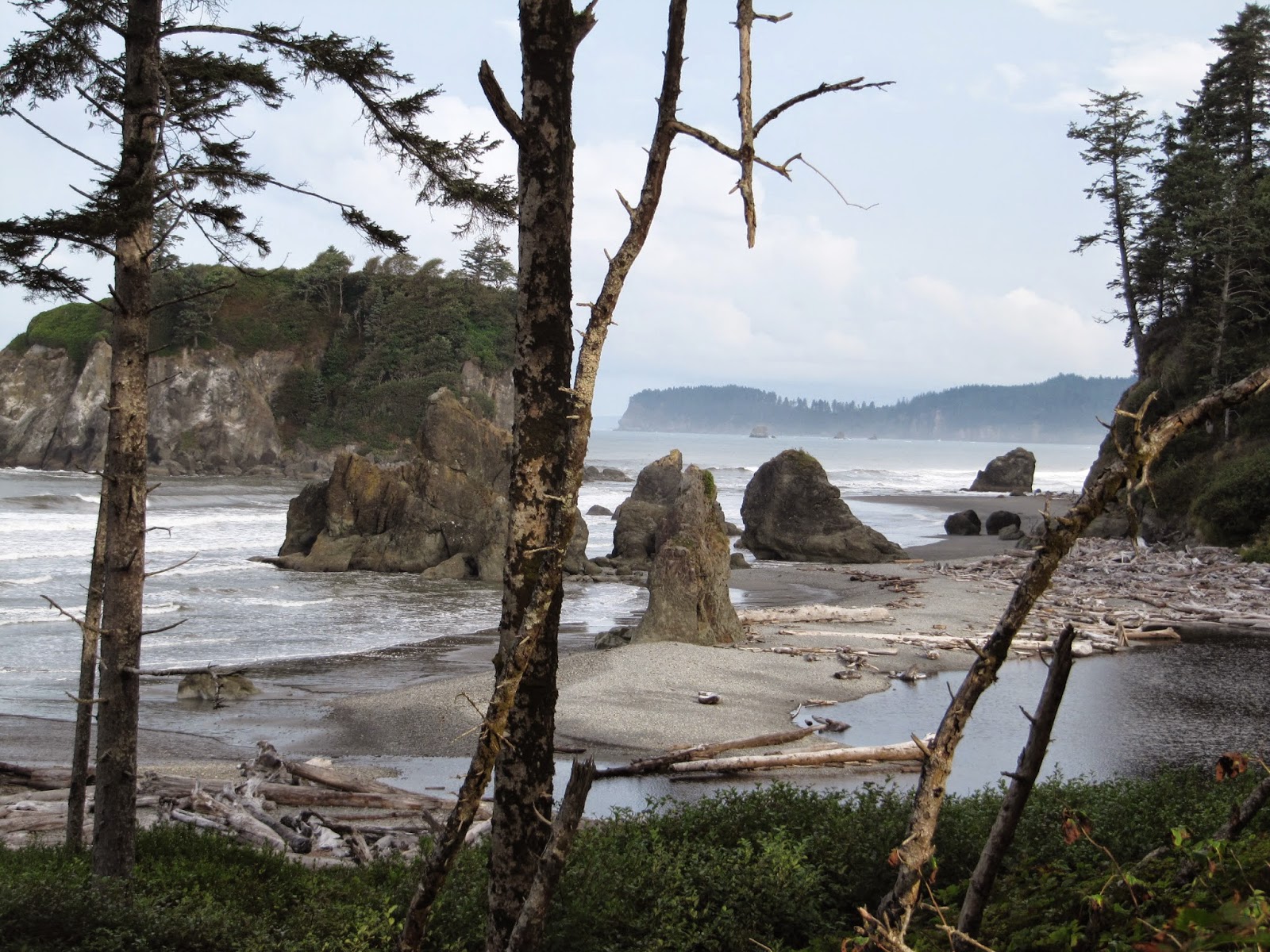
Most of the winter sporting activity is centered at Hurricane Ridge with skiing, cross-country, snowshoeing, and sledding. The road is open on weekends only (weather permitting) and all cars are required to carry chains. On the other hand, the lower altitudes in the park including the rainforests and beaches, receive only occasional snow but plenty of the damp stuff.  The wet season brings out the green lushness of the mosses and lichens making a hike through the Hoh or Quinault rainforests a drippy, but beautiful experience.  Pacific Ocean storms blow through frequently delivering spectacular waves for storm-watching and beachcombing along the coast.

Lake Crescent Lodge
One of the major highlights of a winter visit to the park is enjoying the indoor comforts of the lodges. While booked full in the busy summer months, reservations are much easier to obtain and the prices are reduced during the winter season. Sol Duc Hot Springs Resort is closed during the winter, but Lake Crescent Lodge is open until December 31, and Lake Quinault and Kalaloch Lodges are open year round.

Lake Crescent Lodge dates back to 1916, and enjoys an idyllic setting on the shores of a glacier-carved lake ringed with forests and mountains, about 18 miles west of Port Angeles. The Main Lodge features a lobby with a stone fireplace, a cozy sunroom, a wood-paneled dining room overlooking the lake, and rooms on the second floor with great views, but shared bathrooms.  The property offers a variety of other accommodations to choose from including the historic Singer Tavern Cottages and the Roosevelt Cabins as well as more modern motel-like rooms.
Sunroom, Lake Crescent Lodge
The Roosevelt Cabins are especially popular with guests because of their lakeside setting and fireplaces. While the rest of the lodge closes at the end of the year, these cabins remain open on weekends-only throughout the winter season. 


Kayaks awaiting summer guests at Lake Crescent
 

Further south and just outside the park boundary is another rustic, lakeside inn, Lake Quinault Lodge. Built in 1926 by the same architect who designed Old Faithful Lodge in Yellowstone, it has an expansive front lawn leading down to the lake and a warm and inviting lobby with a large brick fireplace.  In addition to rooms in the main lodge, there is a more modern building with an additional 36 rooms as well as an indoor pool and sauna.
Lake Quinault Lodge
The lodge’s dining room is named after Franklin Roosevelt who lunched here in 1937. He must have enjoyed the meal and view as he signed the bill creating Olympic National Park only a few months later. Winter specials offer room rates equivalent in price to the average Motel 6.


Lobby, Lake Quinault Lodge


Driftwood brought in during storms
The Pacific Ocean coast can be an exciting place in the winter when storms bring in blustery winds and crashing waves.  There’s no better place to enjoy the action than the Kalaloch Lodge, perched on a bluff on the west side of the park.  There are rooms in the wooden, rustic main lodge as well as cabins with fully stocked kitchenettes. The dining room, also open year round, serves up Northwest cuisine accompanied by a sweeping ocean view. With easy access to beaches, a winter visit means great beachcombing and storm-watching. To accommodate guests, the lodge offers a special Brave the Storm package that includes ponchos, hand warmers, hot chocolate, and peppermint  schnapps.

To learn more about rates and seasonal packages, or make reservations at Lake Crescent and Quinault Lodges, check out www.olympicnationalparks.com.  The Kalaloch Lodge website is www.thekalalochlodge.com.  It should be noted that these park lodges are not suitable for guests addicted to wifi, cell phones, and big screen tv. Instead, the simple pleasures of sitting in front of a roaring fire, curling up with a good book, or working a jigsaw puzzle prevail. When visiting the park during the winter months, it’s always prudent to check weather and road conditions in advance.

Wednesday, August 6, 2014

Exploring Oregon Caves: Above and Below


 The slogan on the brochure reads: Cool Cave, Warm Hearth!  It’s a clever turn of phrase but, more importantly, captures the concept that Oregon Caves National Monument offers two featured attractions, one natural and one man-made. The park is located about 50 miles southwest of Grants Pass off U.S. 199.  A narrow, winding road leaves the community of Cave Junction and the Illinois River Valley, and climbs upwards through the Siskiyou Mountains to the monument, about 20 miles.
Cave Entrance


The caves (actually, it is only one cave, but has numerous side passageways) were discovered by white settlers in 1874 when hunter Elijah Davidson’s dog, Bruno, followed a bear into a narrow opening in the hillside. However, the cave began life over 200 million years ago as a tropical reef in the Pacific Ocean, and by a series of complex geologic events, combined with years of water erosion and mineral deposits, evolved into one of the very few marble caves in the world.

Ranger-led tours through the cave are offered between late April and early November and cover a little over a half mile in 90 minutes. In this remarkable subterranean world, visitors are introduced to the geology,
The "Banana Grove"
history, wildlife, and view a variety of calcite formations: stalagtites, stalgmites, soda straws, moonmilk, popcorn. The trip is described as moderately strenuous and includes 500 stairs, some uneven and wet, as well as a few low and narrow passageways. The cave temperature is 44 degrees so a warm jacket is welcome even on a hot summer day.

Across from the cave entrance and Visitor Center sits the park’s man-made attraction, a rustic, wooden lodge known as The Chateau, a National Historic Landmark. From the entrance it appears to be a two-story structure with a steep pitched roof and dormer windows, however, it is actually six stories tall.  This unusual design reflects the challenging and limited building site it occupies, a ravine with a creek running through it.  Construction began in the early 1930s during the height of the Depression. Local contractor, Gust Lium, chose a style coined by Frank Lloyd Wright as “organic
The Chateau entrance
architecture,” promoting harmony with the environment and utilizing local construction materials. In the end, he created a building of natural charm and elegance, well adapted to its setting, with a great sense of place; a “green” structure long before it was eco-fashionable.

The exterior is covered with Port Orford cedar bark creating a shaggy, textured façade while the interior lobby features a massive, double marble fireplace; exposed wooden beams supported by 30-inch diameter, Douglas fir posts; and a staircase of local madrone, oak, and pine. Downstairs from the main lobby is the dining room, gift shop, and a 1930s diner-style café; 23 guest rooms occupy the two floors above the lobby.

waterfall and reflecting pool
One of the most unusual features of the building is the presence of the stream accumulated from dripping surface water inside the cave. There, it is called the River Styx, but once it emerges from the cavern it assumes the less intriguing name of Cave Creek, and flows over a man-made waterfall in front of the Chateau into a picturesque, reflecting pool. From there, it travels into the building, through the dining room, and then out to the canyon on its journey to the Illinois River. 

1930s Coffee Shop
This design plan had an unfortunate consequence in the winter of 1964 when heavy storms, snow and rain combined to release a flood and avalanche that ripped through the bottom floors of the Chateau creating a swath of structural damage and debris. While many considered the building an insurance write-off, others, including original builder Lium, worked tirelessly to save and restore the property.

Today, visitors can enjoy the charming ambiance of one of the Great Lodges of the National Parks from the attractive lobby, restaurant options, and inviting guest rooms.  Both the public and private rooms are decorated with the largest collection of Monterey furniture, a uniquely American, arts- and-crafts style characterized by leather and metal detailing, distressed wood, and painted designs.

Example of the Chateau's collection of Monterey furniture
Throughout the lodge, the emphasis is on local.  The gift shop offers crafts from southern Oregon artists including jewelry, prints, wooden items, jams, soaps, and textiles. In the dining room, the menu is filled with locally sourced meats, fish and produce.  (Be sure to try the bison meatloaf!) The quirky, retro café with its serpentine countertop serves hearty breakfasts, sandwiches, and old-fashioned milkshakes. Even the people waiting on you are local.

Learn more about a visit to Oregon Caves or make reservations for a stay at the Chateau by visiting these websites: Oregon Caves Cheateau and Oregon Caves National Monument.


Monday, June 9, 2014

Heirloom Roses


It’s June. It’s Portland. And it’s all about roses. For years, the Rose City has celebrated its eponymous flower with a festival, parades, royal court, and the obligatory visit to its most famous showplace, the International Rose Test Garden in Washington Park. If you want to smell the roses without the crowds, head south about 25 miles to the Willamette Valley for a visit to Heirloom Roses.
Here, spread out over five acres of themed gardens, are thousands of roses in all colors, shapes, and sizes. Visitors are free to wander through the grounds admiring the Climbers, the Miniatures, the Hybrid Teas, or sit on a bench in the shade and enjoy the fragrance and hues.
In the Sales Cottage, a wide variety of plants are available along with rose-specific gardening tools, books, and supplies. The gardens are open year round with roses in bloom from May to October, but June is certainly the peak time.  Take a look!


Monday, May 26, 2014

The Many Murals of Estacada

For some 20,000 years, humankind has been attracted to the bare wall as a canvas for artistic expression. From the caves of Lascaux in southwestern France where primitive men drew the animals of their known world to the satirical stencilings of British graffiti artist, Banksey, murals have been a popular art form and means of communication. They are considered one of the oldest artistic endeavors and even here, in the Pacific Northwest, native tribes along the Columbia River left art work in the form of petroglyphs that are still visible today after hundreds of years.
The outdoor wall mural has been chosen by a number of small Northwest towns as a strategy for economic development and beautification with Chemainus, British Columbia, as the most noted example. A dying logging community on Vancouver Island, it transformed itself into a huge outdoor art gallery drawing tourists from around the world.  Taking a cue from its northern neighbor, the town of Vale in Eastern Oregon painted 30 empty walls with tales from the Oregon Trail as a way to attract travelers along Interstate 84. Toppenish, Wash., Cottage Grove, Silverton, Springfield, and The Dalles have all dressed up their towns with colorful murals.

A good example closer to Portland, is the town of Estacada, about 35 miles southeast along the banks of the Clackamas River, at the edge of Mt. Hood National Forest. Rather young by Oregon standards, the community was founded in 1905 after a rail line was built to support construction of a series of hydroelectric dams upstream along the Clackamas River. The railroad also serviced a thriving logging and milling industry and the owners of the line (Oregon Water Power and Railway Company) built a grand hotel and park to lure Portland tourists. On weekends, city dwellers rode the electric streetcar out to Estacada or further along the route to Cazadero for an enjoyable day of picnics, fishing, and chicken dinners at the Hotel Estacada.

Over time, the dams were completed, the logging industry faded, the hotel burned down, and the town began to fade as the local economy stagnated. In 1992, several local, professional artists joined together to create the Artback Artists’ Cooperative, and painted the first mural in Estacada. It was so well received by the community that a tradition was born of painting a new mural on the fourth weekend in July during the city’s Summer Celebration. This mural-in-a-weekend program has created a total of 18 murals scattered about town. Because sun and exposure to weather elements have faded many of the older murals, the artists have switched to an alternating program of restoring a mural one year and creating a new one the next year.

Most of the murals celebrate some aspect of the area’s history and recreational opportunities including Native American life, logging, the Barlow Road, train travel, fishing, quilting, and mushroom foraging. On the wall of Wong’s King Chinese restaurant is a colorful mural dedicated to a surprising, local crop called ginseng. In the early 1900s, this medicinal herb was an important element in the local economy, and was shipped to China where it is highly revered for its restorative properties. But, global events including the Depression, World War II, and the rise of Communism in China brought an end to the industry.

To visit the murals, pick up a Walking Tour map available at the Chamber of Commerce office in City Hall on Main Street. Most of murals are located in a compact area of about six city blocks and their color and size make them easy to spot. This year’s Summer Celebration falls on the weekend of July 26 and 27 and provides an opportunity to view a mural in the making. The theme of the 2014 mural is the Hamatsa dance of the Kwakwaka’waka people of Vancouver Island, B.C. and will complete a trilogy of native-themed murals designed by John Freese on the walls of the Harvest Market on Broadway.


In addition to the mural-in-a-weekend project, the festival includes music, arts and crafts, food and entertainment. Unfortunately, the trolley no longer brings city dwellers out to Estacada; you’ll have to drive.

Monday, March 3, 2014

Lasting Legacy of the CCC


At the Forest History Center on State Street in Salem there stands a life-size statue of a hunky, shirtless, young man leaning on a shovel. 
CCC Worker Statue
He is posed in front of a wooden, green building with a pair of gables and twin dormer windows. Their connection is a federal program initiated by Franklin D. Roosevelt shortly after his inauguration to provide jobs for the nation’s growing number of unemployed young men.

Known as the Civilian Conservation Corps, or CCC, it operated between 1933 and 1942, and was one of the most successful and popular New Deal programs.  Oregon was an active participant with over 60 camps scattered around the state. The men built roads, bridges, trails, campgrounds, fought forest fires, and planted trees. In exchange for their labor, they received education, job training, food and shelter (three hots and a cot) and the grand sum of $30 a month. They could keep $5 with the other $25 sent home to their families.  Even though eighty years have passed and many CCC efforts are long gone, about one-third of the permanent projects in Oregon remain and can still be enjoyed in forests and parks around the state.
Forest History Center, Salem

The Forest History Center is a good place to begin. The building was constructed by the CCC in 1936 to house their headquarters, and was moved to its present location from the east side of Mill Creek in 2001. Today, a section of the museum is dedicated to the CCC program and features camp photos, a wall map with site locations, and miscellaneous memorabilia donated by alumni. The CCC Worker Memorial Statue in front was dedicated in 2002.

Silver Falls Lodge
One of the program’s permanent projects is a short distance east of Salem at Silver Falls State Park. The CCC was responsible for constructing much of the infrastructure seen in the South Falls Day Use Area including rocks walls, bridges, stairs and the rustic South Falls Lodge. The lodge and surrounding ten acres are listed in the National Register of Historic Places. In addition, the CCC developed the park’s popular Trail of the Ten Falls.

West Shelter, Cape Perpetua
The Oregon Coast hosted several CCC camps, and remnants of Camp Cape Creek remain visible on the site of the Cape Perpetua Visitor Center, two miles south of Yachats.  Workers here built the campground and network of trails, but their most noted accomplishment was the West Shelter observation point at the top of the headland. Built of rocks, this sturdy structure has survived years of Pacific storms and even served as a coastal watch station during World War II.  Today’s visitors are more interested in spotting migrating whales than enemy boats or planes.

Mt. Hood National Forest, east of Portland, also saw many CCC projects. Camp Zigzag on Highway 26, was the longest running camp in the Northwest, and its workers built the Zigzag Ranger Station on the south side of the road. This compound consisting of various outbuildings is constructed in the Cascadian Rustic style using natural materials such as wood shingles, weatherboard, and native stone.  A similar, but more off-the-beaten-path ranger station can be visited on Forest Road 42, about 20 miles southeast of Government Camp. Here, at the Clackamas Lake Historic Ranger Station, are eleven buildings including a small visitor center. The ranger’s residence was built by the CCC in 1933 and is available for rental during the summer months.

Mt. Hood’s Timberline Lodge, probably the best known Depression-era project in Oregon, was constructed by the WPA, but the CCC worked on the lodge’s terracing, stonework, and landscaping. They built the Timberline Trail encircling Mt. Hood and worked on a variety of other projects in the area including Cloud Cap Inn and several campgrounds.

Malheur Nat'l Wildlife Visitor Center
In other parts of the state you’ll find evidence of the CCC at Crater Lake’s Rim Road and Rim Village, the rock work at Oregon Cave’s Chateau, the Visitor Center and Museum at the Malheur Wildlife Refuge, Jessie Honeymoon State Park near Florence, and the Dee Wright Observatory at the summit of McKenzie Pass.

The CCC program lasted only nine years.  By 1942, the country was gearing up for WWII and young men were leaving to join the army.  However, their hard work through those difficult Depression years left a significant contribution and lasting legacy to Oregon’s public lands.


Thursday, January 2, 2014

Port Gamble: Where the Past is Always Present


Turn onto Rainier Avenue in Port Gamble, Washington, blink twice, and you’d swear you had been transported to a tree-lined village in New England. And, you wouldn’t be entirely wrong.

In 1853, Maine lumbermen, Andrew Pope and William Talbot, sailed around Puget Sound seeking the right place for a Northwest logging outpost for their successful San Francisco- based timber and shipping company. They chose a small harbor off the Hood Canal, brought in mill machinery, and constructed a saw mill, bunkhouse, store, and cookhouse. Named Port Gamble, it became one of several successful, company-owned logging towns taking advantage of the plentiful, first-growth forests around the Olympic Peninsula.

When gold was discovered in the Klondike, workers abandoned their lumber jobs to seek fortunes in Alaska. It was obvious to the company that married men would provide a more stable, dependable workforce.  Pope and Talbot sought to recruit workers from their hometown of East Machias, Maine, and to lure them into taking the long trip west, they recreated the town on the shores of Puget Sound. A proper church, school, and Victorian frame houses complete with picket fences and lawns transformed the rough sawmill town into a little bit of New England in Washington State.

The mill and town thrived and timber from Port Gamble was shipped to ports all over the world including Australia, Hawaii, and England. However, by the late 20th century, overharvesting, economic downturns, and some bad business decisions forced the company to shut down the mill in 1995. It was the oldest continuously operating mill in North America.

However, the company (now called Pope Resources) recognized the unique value of the town, and poured money into restoring the community to its former glory days.  The only remaining company owned town in Puget Sound, Port Gamble is now listed as a National Historic Landmark with tourism replacing timber as the main business.  The homes, commercial buildings, common outdoor areas, and water/sewer system are all owned by Pope Resources and are leased rather than bought and sold.

A good place to begin a visit is the General Store. In the downstairs level, is the Port Gamble Historic Museum (open May through October) where local history is interpreted through a number of realistic tableaux. On the mezzanine, is Of Sea and Shore Museum featuring a remarkable collection of seashells, part of one of the world’s largest private collections. The store, dating back to 1916, sells everything from candy to
sweatshirts, and houses an excellent restaurant serving breakfast and lunch.  Get there early as it is quite popular, but a good alternative is the award-winning Mike’s Four Star BBQ located nearby in the former service station.

The main street is lined with a number of attractive, frame homes and commercial buildings now occupied by antiques shops, retail stores, and a tearoom. You can’t miss the grandiose Walker-Ames house, next door to the General Store. The Queen Anne mansion, built for the mill manager, faces the bay so ship captains would spot it first. Today, it has a reputation for being haunted with mischievous ghosts residing in the basement.

Walker Ames House
Beyond the iconic, wooden water towers, sits the St. Paul’s Episcopal Church, also a company-owned property. Built in 1879, its Gothic windows and needle spire are reminiscent of the Congregational church in East Machias, Maine. The church and a new pavilion overlooking the water have made Port Gamble an increasingly popular wedding destination.

To reach Port Gamble from the south, follow Interstate 5, US Hwy. 101 from Olympia, and Wash. Hwy. 3 past Bremerton and Silverdale. If you want the ferry experience, take the Seattle-Bainbridge Island or, further north, the Edmonds-Kingston ferry.  Other sites nearby include the neighboring town of Poulsbo known for its Norwegian roots, and the Victorian city of Port Townsend. Or, make your stop in Port Gamble a launching pad for a visit to the Olympic Peninsula.

A handy and comprehensive “Walking Tour of Historic Port Gamble” with map, photographs, and descriptions may be downloaded from the following website:  www.portgamble.com.

Tuesday, October 29, 2013

Shore Acres Park, a Seasonal Delight


What an amazing Christmas present Cassie Simpson received in 1906! Her husband, lumber baron and shipping tycoon Louis J. Simpson, gifted her with a splendid mansion on a high promontory overlooking the Pacific Ocean near Cape Arago on the southern Oregon Coast. It must have been a challenge to wrap with its heated indoor pool, huge stone fireplace, myrtlewood wall paneling, and 2700-square foot ballroom.

What began as a summer home eventually became their fulltime residence as art work, riding stables, tennis courts, and a Roman bath were added to the property. Louis had a strong interest in developing a formal garden. The rich soil and coastal, temperate climate created perfect growing conditions, and soon hydrangeas and roses were supplemented with exotic plants from around the world delivered via his ships.

Sadly, Cassie died in 1921 and later that year the entire house burned to the ground. Six years later, an even grander replacement mansion was constructed on the site, but the realities of the approaching financial Depression of the 1930s drained Simpson’s resources. The house was never completed and gradually fell into disrepair. The property was sold to the state of Oregon in 1942 and, during World War II, was used as a barracks for soldiers.

After the war, the house was torn down but the formal garden, gardener’s cottage, and spectacular view remained to become Shore Acres State Park. The park, located 13 miles south of Coos Bay/North Bend, occupies a three-mile stretch of coastline between Sunset Bay and Cape Arago. On the site where the Simpsons’ mansion once stood is a glass-enclosed observation building. This is a great spot for viewing wild, winter waves and migrating whales while staying dry and out of the wind.

Trails to the north and south offer more dramatic views of the surf and tilted layers of exposed rock where wave erosion has created unusual holes and knobs on the sandstone cliffs. Slightly south of the park, a new interpretive overlook offers views to Shell Island and Simpson Reef. Noisy, barking seals, sea lions, and elephant seals can be seen year-round, and gray whales travel along the coast here from December to June.

Competing with this rugged seascape is a remarkable seven-acre botanical garden.  Carefully manicured and maintained, it offers a long season of blooms starting with spring bulbs and tulips (over 8,000), azaleas, and rhododendrons.  Later, roses and other perennials and annuals provide summer color while dahlias take center stage in the early fall. There is also a Japanese-style garden with a lily pond guarded by a pair of bronze herons, and a 95-foot tall Monterey pine dating back to the original estate. An extensive gift shop at the garden’s entrance offers many gardening related items and crafts made by local artisans.

Beginning in 1987, the non-profit Friends of Shore Acres started an annual Christmas tradition of decorating the garden with lights. Today it takes 1500 volunteers to string 300,000 lights around trees and shrubs and 26 holiday trees. Large sculptures shaped by lights include a whale, jellyfish, frog, Dungeness crab, butterflies, and even underwater koi fish in the lily pond. Refreshments and musical entertainment complete the holiday experience. Last year this community event drew 47,000 visitors from 28 countries and 45 states to this remote section of the Oregon Coast. This year’s display will begin November 28 and run through December 31.