Showing posts with label lodges. Show all posts

Thursday, October 2, 2014

Wintering in Olympic National Park


Olympic National Park in the northwestern corner of Washington might not appear on too many winter vacation agendas, but it’s the season when the park shows its more dramatic side. Sure,
Ruby Beach
you’ll run into wet weather, but the payoff in solitude and tranquility is worth it. There’s snow in the mountains, wild waves along the beaches, and the rainforests are never greener.
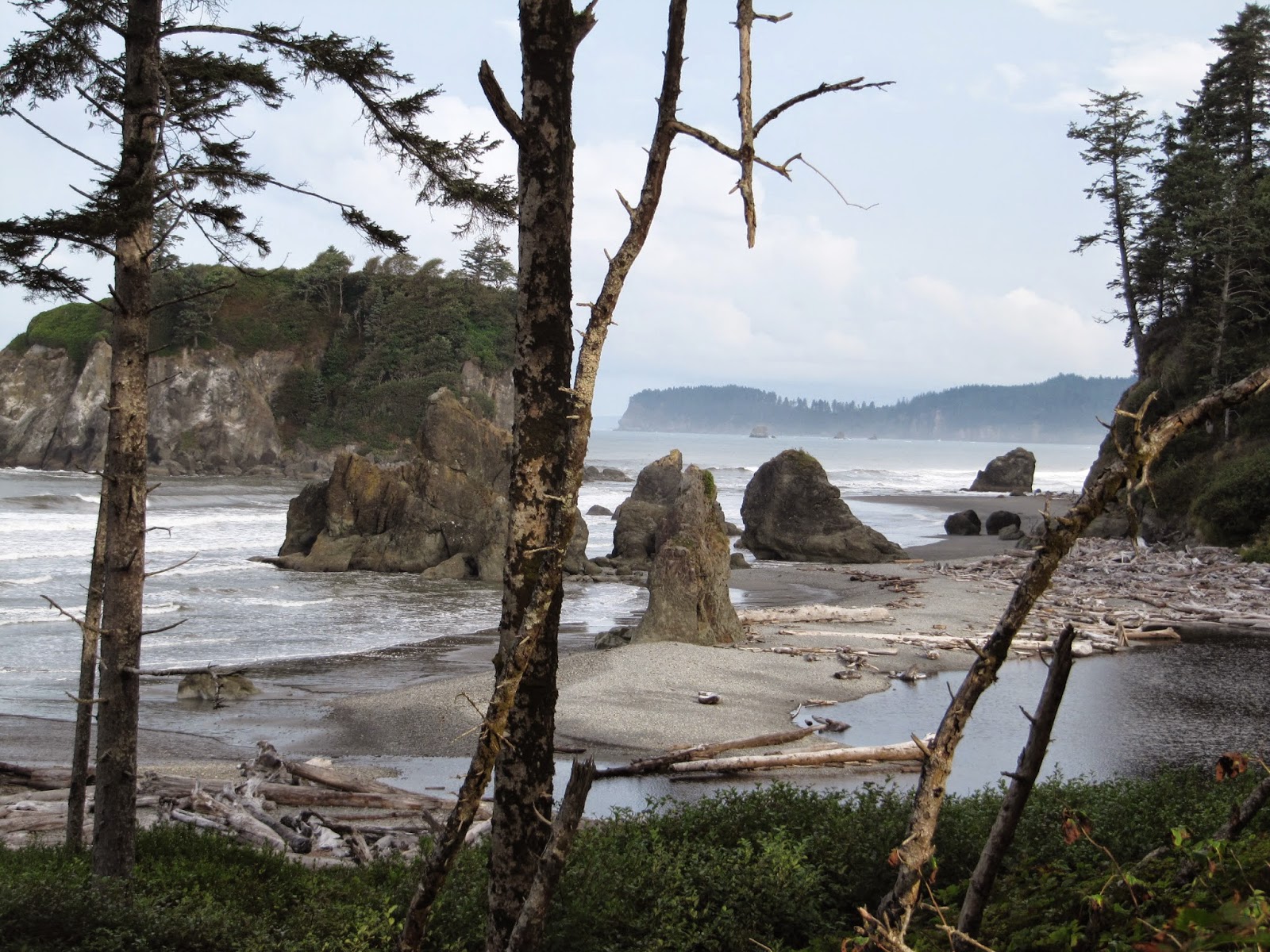
Most of the winter sporting activity is centered at Hurricane Ridge with skiing, cross-country, snowshoeing, and sledding. The road is open on weekends only (weather permitting) and all cars are required to carry chains. On the other hand, the lower altitudes in the park including the rainforests and beaches, receive only occasional snow but plenty of the damp stuff.  The wet season brings out the green lushness of the mosses and lichens making a hike through the Hoh or Quinault rainforests a drippy, but beautiful experience.  Pacific Ocean storms blow through frequently delivering spectacular waves for storm-watching and beachcombing along the coast.

Lake Crescent Lodge
One of the major highlights of a winter visit to the park is enjoying the indoor comforts of the lodges. While booked full in the busy summer months, reservations are much easier to obtain and the prices are reduced during the winter season. Sol Duc Hot Springs Resort is closed during the winter, but Lake Crescent Lodge is open until December 31, and Lake Quinault and Kalaloch Lodges are open year round.

Lake Crescent Lodge dates back to 1916, and enjoys an idyllic setting on the shores of a glacier-carved lake ringed with forests and mountains, about 18 miles west of Port Angeles. The Main Lodge features a lobby with a stone fireplace, a cozy sunroom, a wood-paneled dining room overlooking the lake, and rooms on the second floor with great views, but shared bathrooms.  The property offers a variety of other accommodations to choose from including the historic Singer Tavern Cottages and the Roosevelt Cabins as well as more modern motel-like rooms.
Sunroom, Lake Crescent Lodge
The Roosevelt Cabins are especially popular with guests because of their lakeside setting and fireplaces. While the rest of the lodge closes at the end of the year, these cabins remain open on weekends-only throughout the winter season. 


Kayaks awaiting summer guests at Lake Crescent
 

Further south and just outside the park boundary is another rustic, lakeside inn, Lake Quinault Lodge. Built in 1926 by the same architect who designed Old Faithful Lodge in Yellowstone, it has an expansive front lawn leading down to the lake and a warm and inviting lobby with a large brick fireplace.  In addition to rooms in the main lodge, there is a more modern building with an additional 36 rooms as well as an indoor pool and sauna.
Lake Quinault Lodge
The lodge’s dining room is named after Franklin Roosevelt who lunched here in 1937. He must have enjoyed the meal and view as he signed the bill creating Olympic National Park only a few months later. Winter specials offer room rates equivalent in price to the average Motel 6.


Lobby, Lake Quinault Lodge


Driftwood brought in during storms
The Pacific Ocean coast can be an exciting place in the winter when storms bring in blustery winds and crashing waves.  There’s no better place to enjoy the action than the Kalaloch Lodge, perched on a bluff on the west side of the park.  There are rooms in the wooden, rustic main lodge as well as cabins with fully stocked kitchenettes. The dining room, also open year round, serves up Northwest cuisine accompanied by a sweeping ocean view. With easy access to beaches, a winter visit means great beachcombing and storm-watching. To accommodate guests, the lodge offers a special Brave the Storm package that includes ponchos, hand warmers, hot chocolate, and peppermint  schnapps.

To learn more about rates and seasonal packages, or make reservations at Lake Crescent and Quinault Lodges, check out www.olympicnationalparks.com.  The Kalaloch Lodge website is www.thekalalochlodge.com.  It should be noted that these park lodges are not suitable for guests addicted to wifi, cell phones, and big screen tv. Instead, the simple pleasures of sitting in front of a roaring fire, curling up with a good book, or working a jigsaw puzzle prevail. When visiting the park during the winter months, it’s always prudent to check weather and road conditions in advance.

Wednesday, August 6, 2014

Exploring Oregon Caves: Above and Below


 The slogan on the brochure reads: Cool Cave, Warm Hearth!  It’s a clever turn of phrase but, more importantly, captures the concept that Oregon Caves National Monument offers two featured attractions, one natural and one man-made. The park is located about 50 miles southwest of Grants Pass off U.S. 199.  A narrow, winding road leaves the community of Cave Junction and the Illinois River Valley, and climbs upwards through the Siskiyou Mountains to the monument, about 20 miles.
Cave Entrance


The caves (actually, it is only one cave, but has numerous side passageways) were discovered by white settlers in 1874 when hunter Elijah Davidson’s dog, Bruno, followed a bear into a narrow opening in the hillside. However, the cave began life over 200 million years ago as a tropical reef in the Pacific Ocean, and by a series of complex geologic events, combined with years of water erosion and mineral deposits, evolved into one of the very few marble caves in the world.

Ranger-led tours through the cave are offered between late April and early November and cover a little over a half mile in 90 minutes. In this remarkable subterranean world, visitors are introduced to the geology,
The "Banana Grove"
history, wildlife, and view a variety of calcite formations: stalagtites, stalgmites, soda straws, moonmilk, popcorn. The trip is described as moderately strenuous and includes 500 stairs, some uneven and wet, as well as a few low and narrow passageways. The cave temperature is 44 degrees so a warm jacket is welcome even on a hot summer day.

Across from the cave entrance and Visitor Center sits the park’s man-made attraction, a rustic, wooden lodge known as The Chateau, a National Historic Landmark. From the entrance it appears to be a two-story structure with a steep pitched roof and dormer windows, however, it is actually six stories tall.  This unusual design reflects the challenging and limited building site it occupies, a ravine with a creek running through it.  Construction began in the early 1930s during the height of the Depression. Local contractor, Gust Lium, chose a style coined by Frank Lloyd Wright as “organic
The Chateau entrance
architecture,” promoting harmony with the environment and utilizing local construction materials. In the end, he created a building of natural charm and elegance, well adapted to its setting, with a great sense of place; a “green” structure long before it was eco-fashionable.

The exterior is covered with Port Orford cedar bark creating a shaggy, textured façade while the interior lobby features a massive, double marble fireplace; exposed wooden beams supported by 30-inch diameter, Douglas fir posts; and a staircase of local madrone, oak, and pine. Downstairs from the main lobby is the dining room, gift shop, and a 1930s diner-style café; 23 guest rooms occupy the two floors above the lobby.

waterfall and reflecting pool
One of the most unusual features of the building is the presence of the stream accumulated from dripping surface water inside the cave. There, it is called the River Styx, but once it emerges from the cavern it assumes the less intriguing name of Cave Creek, and flows over a man-made waterfall in front of the Chateau into a picturesque, reflecting pool. From there, it travels into the building, through the dining room, and then out to the canyon on its journey to the Illinois River. 

1930s Coffee Shop
This design plan had an unfortunate consequence in the winter of 1964 when heavy storms, snow and rain combined to release a flood and avalanche that ripped through the bottom floors of the Chateau creating a swath of structural damage and debris. While many considered the building an insurance write-off, others, including original builder Lium, worked tirelessly to save and restore the property.

Today, visitors can enjoy the charming ambiance of one of the Great Lodges of the National Parks from the attractive lobby, restaurant options, and inviting guest rooms.  Both the public and private rooms are decorated with the largest collection of Monterey furniture, a uniquely American, arts- and-crafts style characterized by leather and metal detailing, distressed wood, and painted designs.

Example of the Chateau's collection of Monterey furniture
Throughout the lodge, the emphasis is on local.  The gift shop offers crafts from southern Oregon artists including jewelry, prints, wooden items, jams, soaps, and textiles. In the dining room, the menu is filled with locally sourced meats, fish and produce.  (Be sure to try the bison meatloaf!) The quirky, retro café with its serpentine countertop serves hearty breakfasts, sandwiches, and old-fashioned milkshakes. Even the people waiting on you are local.

Learn more about a visit to Oregon Caves or make reservations for a stay at the Chateau by visiting these websites: Oregon Caves Cheateau and Oregon Caves National Monument.